
applied ai
Empowering better health, informed decisions, and faster progress

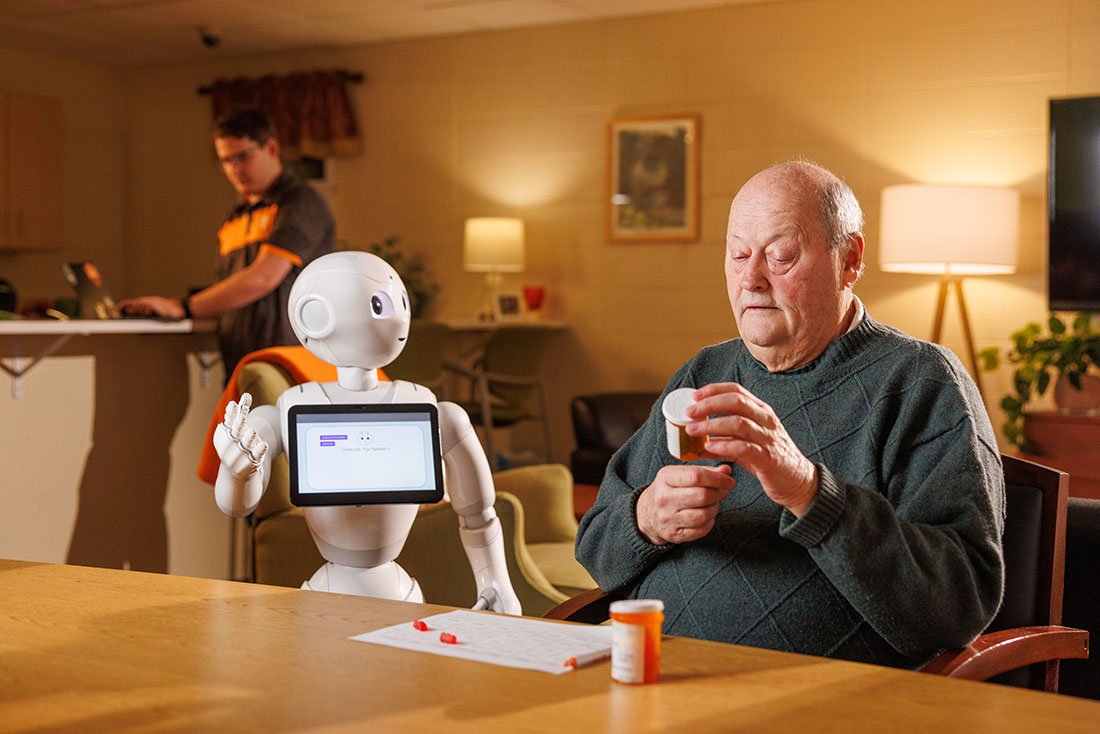
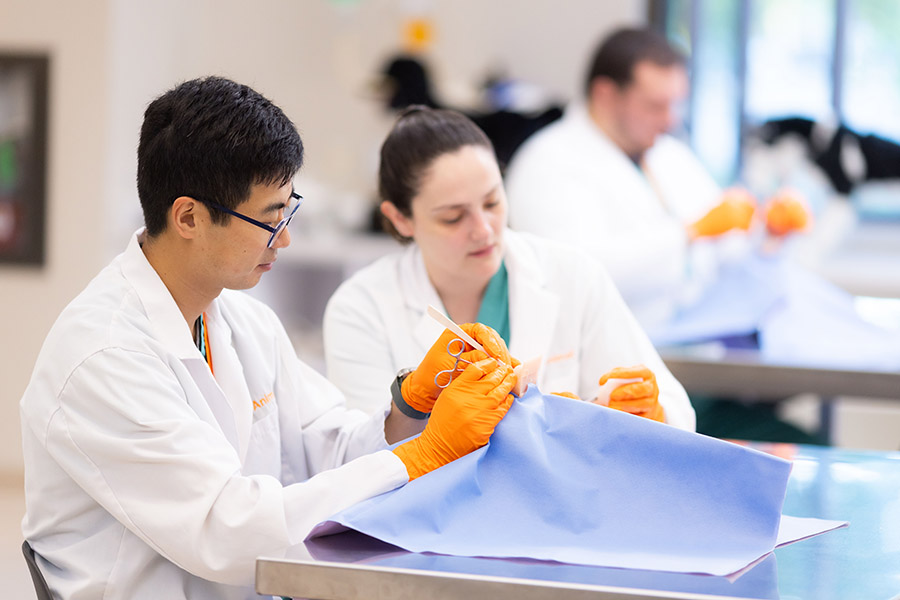

UT faculty collaborate to effectively, ethically implement and manage AI systems in settings ranging from classrooms and boardrooms to hospitals and farms. These AI systems, many of which are developed right here at UT, take a variety of forms including generative AI, smart sensors, robots, and cognitive digital twin platforms. They are designed to enhance human well-being, empower informed policy and decision-making, and improve resource and process efficiency.
Our applied AI researchers are enabling caregivers, investors, policy makers, supply chain managers, and other professionals to put AI to work. They’re solving real-world challenges in real time—to make a lasting difference.

UT’s Approach
At UT, domain experts collaborate with AI researchers to ensure that innovations are both cutting-edge and deeply relevant. In health and medicine, teams from UT, UT Medical Center, and the UT Health Science Center College of Medicine apply natural language processing, reinforcement learning, and explainable AI to clinical data, enabling faster patient-specific decisions in areas such as Alzheimer’s disease, cancer, and sepsis.
Faculty explore AI with wearable technologies to prevent sports injuries and with language models to address health literacy. Beyond human health, researchers extend AI to veterinary medicine and agriculture—developing farm-level monitoring and precision feeding systems, robotic field solutions, and tools to strengthen animal and crop health.
Applied AI also drives business and economic innovation, where UT researchers are creating resources to optimize freight transport, forecast demand, guide financial decisions, and improve supply chain resilience. Some translate their work through entrepreneurship, developing AI-powered platforms for big data visualization. In the public sector, faculty use AI to expand access to complex datasets, inform evidence-based policy, and advise leaders on antitrust and competition law. Both students and faculty engage critically with AI’s long-term impacts through ethics, philosophy, sociology, and literature, supporting the responsible adoption of AI across sectors.
UT is positioned to pioneer AI applications in animal health and veterinary medicine. We are making progress on four fronts: incorporating AI to support diagnostics; training our faculty and students to use AI inside and outside the classroom while being well-versed in relevant ethical challenges; leveraging AI to improve process efficiency; and lastly, leveraging AI to mine valuable insights in medical records.”
Dennis Makau, Assistant Professor of Biomedical and Diagnostic Sciences, College of Veterinary Medicine


Highlights


Facilities & Initiatives
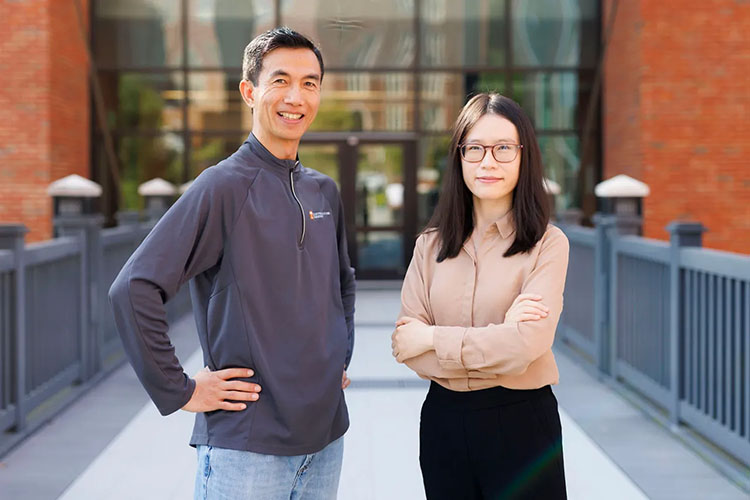
UT faculty apply—and enable others to apply—effective AI systems in numerous applications. Their work is performed both on campus and in business, community, and health care settings.
- Anderson Center for Entrepreneurship and Innovation
- Center for Biomedical Informatics at UT Health Science Center
- Center for the Dynamics of Cultural Complexity (DySoC)
- Climate-Smart Agriculture and Forestry Cluster Hire Initiative
- Data Science Institute
- Denbo Center for Humanities and the Arts
- Infrastructure for Scientific Applications and Advanced Computing (ISAAC)
- Precision Health and Environment Cluster Hire Initiative
- UT Health Science Center College of Medicine (Knoxville)
- UT Graduate School of Medicine (Memphis)

Researchers
-

Associate Professor, Chemical and Biomolecular Engineering
Computation, simulation, theory, cell biology, immunology, intracellular transport, synthetic biology, systems biology, biomembrane, cytoskeleton, nanoparticle, biophysics, machine learning
-

Pilot Corporation Chair of Excellence, Haslam College of Business
Applied Optimization, Supply Chain Analytics
-

Professor, Civil and Environmental Engineering
Biological treatment processes, water and wastewater quality, environmental microbiology, renewable energy
-

Dan Doulet Faculty Fellow and Professor, Industrial & Systems Engineering
Systems modeling, simulation and optimization, agent-based modeling, machine learning
-

UT–ORNL Governor’s Chair for Power Electronics
Power systems, smart grid, micro grid, infrastructure reliance, energy policy
-

Associate Professor, World Languages and Cultures
History of French, humanism, translation studies, theories of authorship, lineage, nationhood, post-colonial theory, and urban studies
-

Professor and Director, Center for National Security and Foreign Affairs
International relations, territorial and maritime disputes, conflict management, Indo-Pacific, US national security

